Global Perspectives Now Global Perspectives Now
Showing posts with label stereotypes. Show all posts

The 'Knockout Game' Is A Myth

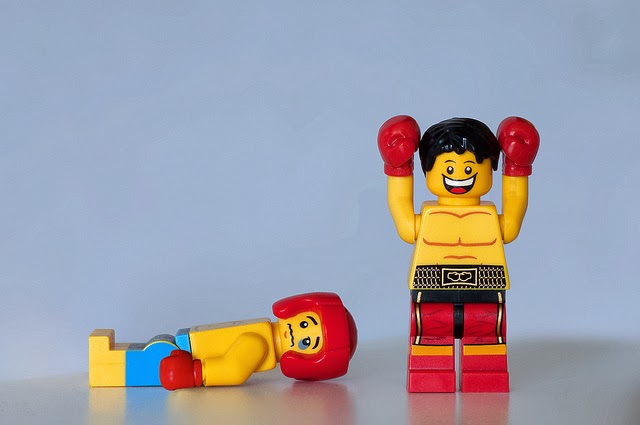
Knock Out: Photo by Daniel Novta.
Knock Out (Photo: Daniel Novta)
Documentary producer, Tariq Nasheed, shows how old video, video from Britain, video of lone adult and teenage attackers, and random video from around the US - has been edited together to make it appear as though there is a "new" game among African-American youth called "The Knockout Game."


The 'Knockout Game' Is A Myth: Excerpts


The "Knockout Game" is a Dream Come True for Racist White Conservatives


Adapted from "Day 29: Knockout!" (Photo: Mike Nelson)


By Chauncey DeVega
I share no sense of linked fate with Marvell Weaver, the hoodlum who was arrested for playing the "knockout game" and then decided to do an interview with the local news about his exploits.

After watching Weaver's pathetic explanation for the logic of his crime, I am left wondering what happened to shame?

Right-wing trolls are doing their best to play up the foolishness called the "knockout game". It is a new moral panic that combines white anxieties about black criminality, fear of black young people, and stereotypes about "African-American violence" which have been cultivated by white supremacists since Reconstruction.
 ________

________

The emails, comments, and stories on Right-wing websites about the faux moral panic "knockout game" phenomena are not rooted in a fair concern about crime and youth brigandry. Rather, the "knockout game" meme is rooted in a pathologically white racist obsession with "black crime"--what is alone and unique in its distinction, as white privilege has disallowed any discussion of "white crime" in America's public discourse.

READ MORE...

China, Stop Calling Uyghur Muslims Terrorists

Ethnic Uyghur Muslims are more and more often associated with the term “terrorist” in China. Local authorities and media outlets often define violent incidents in border regions as terrorist activity. This official definition has turned random individual criminal acts into the collective responsibility of an ethnic minority and resulted in the labeling of its members as terrorist suspects.

By Oiwan Lam

The latest officially defined “terrorist case” happened on November 16 2013 in Xinjian Bachu county. Eleven people were killed in a police station, two were local police officers and nine were Muslim Uyghurs from Bachu county.

Uyghur elders with child. (Photo: Todenhoff)


The Xinjiang local authorities quickly defined the incident as a violent terrorist attack and claimed that stability was effectively restored as the nine violent assaulters were shot dead. However according to Radio Free Asia, people who surrounded the police station had managed to capture the young attackers alive while the police officers chose to shoot them dead on the spot. As all the witnesses aside from the police are dead, it keeps people wondering what had exactly happened inside the police station.

Chinese dissident Hu Ping raises a number of questions about the incident:


In reply to Hu Ping, IIham Tohti, an Uyghur university professor, stressed the need to revise the Chinese government's ethnic policy:


 A few months ago in April, a similar ethnic clash happened in the same Bachu police station and the violence left 21 people dead, including 15 police officers and government officials. The incident was also defined as a terrorist assault.

Against the background of the establishment of a top-level national security committee (NSC), many believe that ethnic minorities in border areas will become the target of anti-terrorist security control. For example, Kai Lei, a media worker from pro-Chinese government newspapers Wenhui Bao, urged the NSC to adopt a hard-handed policy in districts such as Bachu:

 
Yet the definition of terrorist assault is highly problematic in China as anonymous writer from Uighurbiz.net, “Little grand father_Aike” pointed out. The writer compared two sets of incidents in 2013 to indicate the arbitrary definition of a violent terrorist assault: the June 7 Fujian bus station arson vs. the October 28 Beijing Tiananmen Jeep cash incident, and the August 25 Chengdu hospital assault vs. the November 16 Bachu police station assault.

The arson case in Fujian left 47 dead and 34 injured, and the police said it was committed by an angry and desperate individual and defined as a criminal case. The Beijing case resulting in five dead and 38 injured was defined an organized terrorist attack. Among the dead were the three Uyghur sitting inside the Jeep.

The writer pointed out that the very definition of the crimes has instigated different reactions to the criminals. In the first casex people see it as an individual act of insanity, but in the latter case as an ethnic-based organized terrorist act:


When comparing the Chengdu assault and the Bachu assault, even though the Chengdu one was well planned and specifically targeted at medical workers in a hospital, which resulted in five dead and 11 injured, the case was defined a random act of individuals, while the Bachu case, in which the nine assaulters were shot dead on the spot, was defined as a terrorist act:


He urges authorities to reflect on the ethnic policy and help minorities establish a positive image of the ethnic group:


Reprinted with permission from Global Voices.

Black Teen Murdered While Seeking Help After A Car Accident - Was Shot Through A Locked Screen Door

19-Year-Old Died Nov. 2 After Being Shot in the Face - Killer  charged with murder and possession of a firearm. Which raises the question: If killer's firearm possession was illegal, why wasn't he arrested on the spot?
Poster: dignidadrebelde

A suburban Detroit homeowner who shot a woman on his porch in the middle of the night was charged Friday with second-degree murder in connection with the case, Wayne County prosecutors said.

Theodore P. Wafer, 54, of Dearborn Heights, Mich., also is facing charges of manslaughter and possession of a firearm... Authorities saw no evidence of forced entry on Wafer's home. Renisha McBride allegedly was shot after knocking on the locked front screen door. Evidence suggests that Wafer opened the front door before he fired through the closed and locked screen door, she said.


READ MORE...

Murder and Manslaughter Charges for Man Who Shot Teen Seeking Help After Car Accident

Killer Claimed His Gun Went Off by Accident, His Lawyer Later Said the Killing was "Justified"

Poster: dignidadrebelde
By Ronald Jackson
Theodore Wafer will be charged with murder and manslaughter, according to Wayne County Prosecutor Kim Worthy.  The 54-year-old Wafer shot dead 19-year-old Renisha McBride in the early morning hours of Nov 2, when she knocked on his door seeking help after a car accident. The incident took place in Dearborn Heights, MI.

Wafer told police he thought Ms. McBride was trying to break into his house and his gun discharged by accident, hitting McBride in the face with a shotgun blast. However, his lawyer later claimed that the killing was "justified."

Wafer was not arrested after the killing. There has been a national outcry over the incident because Wafer had not been arrested, charged, or even named by the police or prosecutor's office until today.

Some have argued that if the shooter had been black and the victim white, the shooter would have been arrested and charged immediately. Wafer is expected to turn himself in Friday afternoon.


Melissa Harris Perry On Renisha McBride

Killing of Woman Seeking Help After Car Accident Called 'Justified' By Lawyer - After Shooter Claimed Gun Discharged 'Accidentally'


Evidence In Renisha McBride Case Will Show Shooting Was ‘Justified,’ Says Homeowner’s Lawyer (via http://mybeautifullife.me)
Lawyer Says Evidence to Be Released From Huffington Post: DETROIT — The lawyer for a man implicated in the shooting of 19-year-old Renisha McBride believes evidence will show her client’s actions were “justified.” McBride died after being…


RELATED STORY
"KNOCKING WHILE BLACK": Renisha McBride Shooter Tells Police that he Discharged his Gun 'Accidentally'

VETERANS DAY: The Pacific - The Warriors That HBO Forgot

Veterans Day

Thanks Vets!

Wilfred Jackson: United States Navy - SEABEES
World War II - "The Pacific"
________


The Warriors That HBO Forgot
It took me less than 5 minutes to find these photographs and
accompanying information online. So why were blacks almost
(if not completely) absent from HBO's World War II series "The Pacific"
(produced by Steven Spielberg & Tom Hanks)
and almost every other Hollywood movie
about WW II in "The Pacific?"

This video is dedicated to the black men and women
who served and died in The Pacific during WW II.


Race, Feminism and Patriarchy in Pop Culture/Music: The Difference Between Rihanna and Miley Cyrus

Can conversations about women in pop move beyond a binary of agency or exploitation?

By Reni Eddo-Lodge
The feminist debate after Miley Cyrus’ VMA performance rarely touched upon the issue of race.  A comparison with Rihanna’s ‘Pour It Up’ video illuminates the dominant tropes being played out in pop culture

Photo: Sean MacEntee
Sinead O’Connor and Amanda Palmer have swapped open letters, concerned about the future of Miley Cyrus. Between feminist cries of slut shaming, paternalistic concerns of exploitation, and sex positive insistencies of agency, the conversation spirals round with no end in sight. Both Palmer and O’Connor’s letters do not deem race worthy of including in their analyses of Cyrus’ behavior. But why would they? Solidarity is, as always, for white women.

There has been much written about Miley Cyrus' image change. She is not the first white girl to adorn herself in mainstream perceptions of blackness like a Halloween costume, reveling in actions tantamount to the modern day black face. Before her, there was Kreayshawn. Iggy Azalea simmers in the background, too. When Iggy publicly claimed Miley stole twerking from her, irony curled up in a ball and died.

Photo: StarblindKing
Thus, history is rewritten. Twerking’s pop culture reference morphs into whiteness – lacking legitimacy until a famous white person co-opts it for themselves. Elvis was perhaps the most famous example of this phenomenon. Eminem openly rapped about it. In his White Rapper FAQ, comedian Aamerr Rahman writes ‘benevolent white people […] who want to forcibly colonize, appropriate and redefine other people’s culture and history are how racism and wars started.’ In her essay Can the White Girl Twerk, Ayesha A. Siddiqui defines this as ‘racial drag’.

Miley Cyrus’ VMA performance was the cumulative effect of her continued work toward this point. The black women backing dancers who surrounded her performance were difficult to distinguish.  Their eyes were blacked out with sunglasses, but then, no one was looking at their faces. Their bodies were voluptuous- wide hips, thick thighs- a stark contrast to the former Disney star. Every so often, Miley would stop to slap or motorboat their flesh. They were relegated to the side lines so that she could shine.

There was outcry when Miley’s VMA performance partner Robin Thicke used almost naked white and light skinned black women in the background of his latest pop video, Blurred Lines. When it comes to her backing dancers, Miley’s objectifying tactics are not dissimilar.

White women – conventionally attractive white women with access to class privilege – are the "housecats of society." as Chelsea Fagan succinctly puts it. Subject to gendered oppression, of course. But ‘so much [of this] oppression stems from condescension, infantilisation, and over protection.’ What both Fagan and Siddiqui discuss frankly is the perceived purity in straight, white female youth.

Alongside a new found penchant for nudity, Miley considers the perceived hyper-sexuality of black female flesh intoxicating enough to attempt to emulate. She imitates an ugly colonial narrative that stems from a violent past. Our waists, our hips and our thighs are not inherently sexual once we’re released from the restrictions of the male gaze, or the stranglehold of white dominated cultural appropriation.

Photo: Eva Rinaldi
 At the polar opposite of pure white womanhood is blackness and the implications that come with it. Suspicion, aggression, and hyper sexualisation - each adjective is gendered. Like the trope of pure white womanhood, they are rigid and restrictive. Against a backdrop of structural racism and white supremacy, white women indulging in this perceived state of blackness is the ultimate rebellion.

Whilst Miley Cyrus rapidly becomes the pop culture reference point for twerking, Rihanna’s ‘Pour it Up’ video snatches the reference back. The comparison between the two, then, is where much maligned black female flesh fits into performance - if it does at all.

Maya Angelou writes it well. ‘Does my sexiness upset you? / Does it come as a surprise / That I dance like I've got diamonds / At the meeting of my thighs?’

One could argue it’s a subtle difference. But in a video co-directed by the artist, black women are released from the margins, and are taking center stage.  Whilst Miley uses black female flesh as props to make a point, Rihanna takes the position of both client and dancer. Fur coat, shining rocks and dollar bills all signify unbridled power. A pick up artist might call it peacocking. There is no male gaze on screen to lap up the scenes.

What’s prized as aspirational or desirable in white women’s bodies is not the same as black women’s bodies. We’re not represented in many mainstream representations of beauty. Black female artists, then, who opt to twerk center stage with pride, are making a statement. With limited access to the structure of pure white womanhood, we operate within racialized respectability politics. Described well by Tamara Winfrey Harris in Bitch Magazine, respectability politics require black women in the public eye ‘to be noble examples of black excellence. To be better. To be respectable’.

Photo: Julia Stavale
Against this backdrop, Rihanna's attitude can be read as an act of radical self-love. Black women’s bodies, in her limited sphere, are free from the patriarchal construction of the male artist. Whilst too many mainstream representations of sex positivity have sorely lacked any analysis of race, its central ethos has encouraged women to explore and celebrate many aspects of their sexuality free from patriarchal judgement and barriers. Why then, isn’t Rihanna’s twerking celebrated as sex positive agency? Where are the defence barriers insisting that criticism of her is rooted in slut shaming?

Pop music has a long way to go before women can step onto a stage without worrying about their looks. We are too far down the slippery slope of trading on objectification for any conventionally attractive female pop star to totally reject the rules of the game. It would be disingenuous to suggest that liberation can be found in expressions of agency alone, but it’s clear that the conversation about must stretch beyond agency or exploitation.

----
About the author
Reni Eddo-Lodge is a writer based in London. She campaigns for a living and is interested in social justice. Her writing achieved a high commendation from Channel 4's Best Young Blogger competition back in 2010, and she blogs here.


Reprinted with permission from openDemocracy.